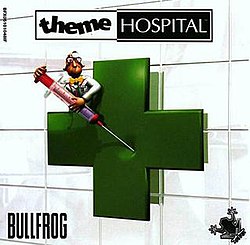
General information
The game is set in a hospital, and demands the player to construct an environment that will bring patients with comical ailments, illnesses, crises, and disorders. The game has a somewhat dark sense of humour, which is much like that of Theme Park in lots of ways. The player has no direct control over the patients that roam the hospital, although gameplay mainly centres on determining their activities in a single manner or another. The player does, nevertheless, possess the capacity to pick up any staff member in the building and transfer them to another region (to accelerate their movement from place to place) and to expel any patients from the hospital (if they're being a pain, causing rowdiness or going to expire and change the hospital's data). The player might also push the individual into taking a chance of potential remedy in the danger of killing the patient (this is useful, for instance, if a patient is going to expire but has already finished enough diagnostics conditions to recognize the type of disorder the individual is suffering from) and rearrange the queue of every one of the rooms in the hospital (useful for transferring dying patients to the very front of the queue to allow them to get treatment first).Each level contains an empty hospital to strategy and design, with set targets in the areas of fiscal achievement, patients treated, percentage of patients treated, and hospital worth. Holding negative funds or permitting adequate patients to expire will bring about losing demands. When the targets are fulfilled the player has the choice to proceed to a fresh, more complex hospital with more demanding successful states and more disorders present. The last amount in the match, 'Battenburg' consists of an enormous, though somewhat difficult, hospital along with each of the disorders and rooms in the game present, all calamities regular and extremely high successful demands.
During development the game featured actual ailments which must be studied and treated, yet before release it was changed to fantastic humor afflictions.
Gameplay
The game revolves around purchasing and setting rooms (or facilities) in a hospital, and hiring physicians, nurses, handymen and secretaries to run it. Some rooms are essentially needed for the running of the hospital, including GP's offices, Staff Rooms, and Loos, but others supply discretionary services (including General Analysis rooms, Scanner Rooms and X Rays). Some rooms are devoted to the therapy of a particular sickness, as well as several rooms include machines which must be fixed sometimes. Rooms are broken up into 4 groups: Identification, Treatment, Practices and Facilities. Some rooms, notably the Ward and Psychiatric, may overlap and appear on two classes.Patients are drawn to the hospital, in part, by the standing of the hospital as well as the expense of treatment there. They arrive with several entertaining fictitious sicknesses which should be diagnosed and treated to bring in cash and reach goals determined by the game. Rooms and gear to treat fictional and comical ailments including "Bloaty Head", "Slack Tongue", "Fractured Bones", "Serious Radiation", "Hairyitis" and "Baldness" has to be studied before they could be put in the hospital, while other illnesses like "Heaped Hemorrhoid", "Unusual Cold" and "The Squits" need research before a treatment could be supplied utilizing the drugstore. Advanced degrees in the game attribute outbreaks (not on the EU PlayStation variation) where the player must either pay a fine and take a standing hit or attempt to stop a disease infecting other patients by treating contaminated patients and vaccinating others within a specific time limit and without discovery by the Ministry of Health (getting the attention of the ministry by the resources of an infected patient leaving the hospital or the time limit running out brings upon a generally more serious fine and more difficult standing reach [although this is glitched in some variations of the game and occasionally fine the players less if they attempt to cover up the epidemic], while successfully suppressing the outbreak and before news achieves the ministry will bring upon bonuses). Medical emergencies additionally take place, where several patients experiencing the exact same ailment should be treated within a stated time limit, and quakes happen which damage gear. Gear could also break down after lengthy use and neglect.
At the conclusion of each year, the player may be presented with several awards predicated on their performance and direction of their hospital. These awards also supplies bonuses like added cash or increased standing. In case the player does badly, yet, he or she can lose the match, together with the game finishing with a CGI full motion video.
Staff
The success of any hospital lies in hiring well-trained staff. Staff are divided into four types of expertise: Doctor, Nurse, Handyman, and Secretary.Doctors typically demand higher wages in relation to the other three professions, as well as serve a far bigger purpose; they can diagnose and treat most sicknesses, they are able to study new sicknesses and gear and they are able to train other physicians. Doctors can specialize in psychiatry, operation or research (or some mix of the three) and they pass their specialty(s) to the physicians they train. Nevertheless, physicians also have positions, and only advisor-rated physicians can train other physicians. Nurses run the Drugstore, the room for Orthopedic casts known as the break clinic as well as the hospital ward, in addition to being responsible for vaccinations during an outbreak. Handymen clean the hospital, repair machines and water the plants.
All staff together with the exclusion of the secretaries, are influenced by both tiredness and heat, which should be cared for if the staff are to stay content. Usage of staff rooms enables staff to be rested, which is often furnished with several relaxing and amusing apparatus. Setting the right variety of radiators in rooms enables staff to be kept warm. Additionally plants are desired in rooms to comfort patients, as if they get too uncomfortable, they may leave. Having the staff overworked frequently results in the staff demanding a raise and threatening to stop, but in a few instances the staff may go mad instead, although this has no known bad effect in the game.
Micromanagement
Micromanagement is greatly used in Theme Hospital, also it may affect both the hospital's efficacy and its own standing. The player must order and furnish the rooms to minimize the time necessary for the physicians to do their jobs and meet the requirements their patients. These needs comprise a comfy temperature (neither too hot nor too cold), a clean surroundings, seats to sit down on, and access to drinks and toilets. Also, the player can manually pick up members of the staff and drop them where their intervention is desired (e.g. put a physician in a room left unattended to see a patient, or a caretaker over a vomit pool to clear it up), as occurs in Dungeon Keeper. With no player intervention jobs are finished a lot more slowly, since in many degrees the staff members must go from one end of the hospital to another. The player can also advance a patient in a queue for a room or ignore them, to be able to prevent a departure within their hospital, which negatively affects the hospital's standing and decreases the amount of end-of-year awards.Economical direction is, in addition, significant: the player can alter the cost for the treatment in each of the rooms, balancing a low standing with affordable costs to get visitors or immediately raising cash while keeping a consistent amount of visits because of high standing. A standard approach is, in addition, to put seats and radiators next to one another, to be able to make the patients feel overly hot and purchase high-priced drinks from the vending machines.

No comments:
Post a Comment